sleepless.jpg[Bloggers note:  Today’s post comes from the vivid imagination and prolific keyboard of frequent guest blogger and immigration-compliance maven Nicole “Nici” Kersey who shares her introspectively humorous musings at almost a TMI level while informing us of anxiety-inducing Form I-9 issues that stress her (and likely most employers) out.  By the way, the photo image is not of Nici but of someone equally perplexed by gnawing I-9 questions]

Egads!  I-9 Questions that Keep Me Up at Night

By Nicole Kersey

After every social interaction in which I am a participant, I rehash the event to determine how many idiotic and/or offensive things I did and/or said. 

This rule applies to parties, meals, and even simple 10-second greetings as I pass someone in the hall.  I can spend days worrying about something I did, didn’t do, said, or didn’t say, prompting me to send an e-mail or text a week later to apologize to the person I thought I offended, only to find that the person has no idea what I’m talking about.  This makes matters worse, as I have to explain what I did, didn’t do, said, or didn’t say and why the thing I did, didn’t do, said, or didn’t say might have been offensive (and why it was, instead, hilarious).  I really hate having to tell people that I am funny. 

I’ve always been an anxious person.  As thoughts fly through my mind, I’ll catch a glimpse of one, and it will worry me, but by the time I realize I’m worried, I can’t remember what it was that caused the worry.  I have to press rewind on my brain to catch the thought, worry about it, and release it.

Every so often, I catch myself feeling worry-free.  When this happens, it causes me to panic, as I am certain that I’ve forgotten to worry about something.  (And I usually have.)

When you are friends with Angelo on Facebook, you see a number of memes from “Meditating Lawyers.”  A recent one caught my attention.  It read

If you don’t try to stop whatever is going on in your mind, but merely observe it, eventually you’ll begin to feel a tremendous sense of relaxation, a vast sense of openness within your mind – which is in fact your natural mind, the naturally unperturbed background against which various thoughts come and go.

Mingyur Rinpoche

So I’m making an effort to observe and accept my constant anxiety.  I recently had an opportunity to observe my own anxiety as Christmas card season came and went, and I didn’t send a single card.

Right after I got married, I was feeling all grown up and sent Christmas cards to everyone I could think of.  We still had our invitation list from the wedding, and all of the addresses were at our fingertips.  I did not enjoy sending the cards, and being somewhat self-aware decided then and there to never do it again. 

For someone who is already anxious, Christmas card season is hell.  First you have to pick the card.  If it’s funny or says Christmas on it, someone might be offended.  If you’re going to send a photo card, you have to plan in advance and choose the right photo.  If you’re sending a newsletter, you have to make sure not to offend anyone by leaving out some event in which he was involved.  You have to write funny and meaningful stuff.  Find everyone’s address.  Make sure not to omit anyone.  You don’t want your cousin to bring the card up at the next family gathering (because of course it would be conversation-worthy) when a distant uncle sitting at the same table didn’t receive one. 

But the stress of sending cards is replaced by the worry that I may offend people who send me cards by not sending one back.  We move a lot, so people sending cards send me a pre-card message asking for our new address, giving me an opportunity to feel guilty even before receiving the card. 

And what to do about those cards that others send to us?  Send a thank you/apology note back explaining why we don’t send cards?  Keep them forever?  I don’t feel like I can toss a friend’s family photo in the garbage.  So we have a huge box in our attic containing every Christmas card, wedding invite, birthday card, etc. that we’ve ever received.  If I’m ever on the Supreme Court, maybe these will be useful for whoever is in charge of curating the “Nici museum,” but otherwise I’m just starting down the path of becoming a hoarder.

The number one reason that I don’t do holiday cards is that I don’t want to set a precedent.  Once you’ve sent a mind-blowingly awesome card, you have to follow through next year with one that blows even more.

Last year I made the mistake of writing a holiday-themed blog post for Angelo.  And this year I did not do one.  Ever since the twelfth day of Christmas, I’ve been anxious about this.  Did my reader(s) (are there more than one?) notice that I didn’t do one?  Are they mad at me?  Offended?  Do they think that Angelo didn’t like what I wrote and chose not to post it? 

To make myself feel better, I’m providing a belated Christmas gift to Angelo and to you.  Here are my top ten simple and easy ways to avoid fines for I-9 errors.  These issues are common, contribute to my self-diagnosed GAD (Generalized Anxiety Disorder), and once aware of them, employers can easily (and cheaply) avoid them.

Top Ten Questions that Make Me Anxious (or Top Ten Easily Avoidable I-9 Errors)


  1. What’s an I-9?  Many employers don’t know what an I-9 is.  If you are one of them, find out.  Now.  And start completing them.  You are required by law to have an I-9 on file for every current employee in the U.S. who was hired after November 6, 1986.  You are also required to have I-9s on file for certain former employees, but if you’re hearing the term “I-9” for the first time, you can’t solve that issue.  Focus on the current employees, then call an attorney to schedule training.
  2. 2.       Don’t I only have to do I-9s for foreigners?  Uh, no.  You have to do an I-9 for every new hire (see page 3 of the Handbook for Employers) who works in the U.S.  It doesn’t matter whether the person is a U.S. citizen, a green card holder, a foreign student, your best friend, or your grandmother. 
  3. 3.       I track expiration dates carefully and reverify every time any I-9 document expires.  So I’m doing great, right?  No.  Make sure that you are only reverifying when you are required to do so.  You should never reverify an expiring driver’s license or green card (so long as the document was unexpired at the time the I-9 was completed).  You will usually only reverify when an individual’s employment authorization is set to expire or when he presented a receipt at the time of hire.  Call me or Angelo so that we can schedule training.  Getting this wrong can lead to an invasive, time-consuming, and potentially expensive audit by the Department of Justice. 
  4. 4.       What’s reverification?  Yikes.  If you hire someone who has temporary work authorization (for example, someone who has an Employment Authorization card or who is working on an H-1B visa) you have to update the I-9 when the employee’s work authorization is set to expire.  (See page 12 of the Handbook for Employers.)  The I-9 must always evidence continuing eligibility to work in the U.S.  Again, call to schedule training.  Not reverifying could lead not only to fines but, in a worst-case scenario, to prison. 
  5. 5.       It doesn’t matter if I’m a couple of days late, right?  Yeah, it does.  Not completing the I-9 on time is one of the most common mistakes employers make.  Tardiness is a substantive error, meaning that it can (and often will) lead to fines in the event of an inspection.  It’s an easy one for inspectors to identify, and immigration judges agree that tardiness is a reason to impose fines.  (See page 5 of the decision.)  Remember that the employee has to complete and sign Section 1 on or before the first day of work for pay and that you have to review original documents and complete and sign Section 2 by the end of the third business day after the first day of work for pay.   
  6. 6.       So shouldn’t I just have the employee date the I-9 using his first day of work (and then backdate it myself)?  Surely no one would ever know, right?  Wrong.  This is fraud.  It is often detected by government inspectors, and it can lead to a poo storm.  Avoid said storm at all costs.  If the I-9 is late, it is late, but at least you completed it (see #1).  And by completing it, you have started the statute of limitations, meaning that the government has 5 years to inspect your I-9s, find the error, and file a complaint against you.  If those 5 years pass without incident, you can no longer be fined for the tardiness. 
  7. 7.       I’m looking at my I-9s, and they look great.  The only problem is that a lot of employees didn’t check a box in Section 1 to indicate their status.  But they all presented U.S. passports and green cards, so their status is obvious, right?  Yes, their status seems obvious.  But that doesn’t mean that this is perceived as an “innocent” error by the government.  If an employee does not check one of the status boxes in Section 1, the employee’s attestation in Section 1 is deemed nearly meaningless by the government (and immigration judges have tended to side with the government on this).  And just to be clear, while the employee is the one who made the mistake, the employer is held responsible for making sure the employee completes Section 1 properly, so it is the employer, not the employee, who will be fined.  See page 15 of this decision 
  8. 8.       I copied and kept copies of the documents my employees presented for I-9 purposes, so I have proof on file that they are authorized to work.  I don’t have to put all of the document information on the form, do I?  While it may seem silly, yes, you do have to transcribe the document information onto the form.  Make sure that all of the fields are properly completed and that you have signed and dated Section 2 of the form.  Again, you can be fined for failing to do this.  Take a minute and do it.  See page 9 of this decision.  
  9. 9.       There’s no way I’ve hired unauthorized workers.  I make everyone present extra documentation, so I’m absolutely sure that everyone is authorized to work.  How could I possibly be in trouble?  You could be in trouble for so-called “overdocumentation,” which is a form of discrimination.  Fines for this are equal to those for not having reviewed any documentation at all.  Make sure that you only require (and only accept) one document from List A or a combination of one List B and one List C document. 
  10. 10.   Social Security cards are easy, right?  List C document.  Bam.  I’m done.  Not so fast.  Social Security cards have become increasingly confusing.  Remember the following: 
    1. a.       Don’t accept a “restricted” card as a List C document.  If the card says “Not Valid for Employment” or “Valid for Work Only with DHS (or INS) Authorization,” you cannot accept it for List C.  It is probably a valid card, but you need to ask the employee to provide some other List A or C document instead.  See page 44 of the Handbook for Employers 
    2. b.      Don’t accept a metal or plastic Social Security card.  These have never been issued by the government.  Note that these may just be recreations that employees had made so that they would be sturdy and could be carried in a wallet.  Tell the employee that he/she needs to present the original card or another List A or C document instead. 
    3. c.       Don’t accept a Social Security card “stub.”  This is the tear-off portion of the mailer that includes the employee’s address.  In the “olden days,” the stub was the same size and shape as the card and is easily mistaken for a card. 
    4. d.      Accept unsigned cards, so long as they appear to be genuine and to belong to the employee.   
    5. e.      Know that a print out verifying someone’s name and SSN is not a receipt for replacement of a lost, stolen, or damaged card.  See page 43 of the Handbook for Employers 


Merry Belated Christmas.  I hope these tips are helpful.  And thank you for allowing me to move on and worry about something else.  To my friends and family:  watch out.  You may be getting Christmas cards from me in July.


P.S.  For those of you who are accustomed to a Cookie Monster reference, here’s a really awesome spoof on Catching FireWouldn’t want to disappoint.   


half a loaf.jpgAt the beach when the tide is going out, the waves recede and it seems that nothing is happening in the sea. But the truth is that the great swells are gathering strength beneath the waters, building energy for the time the tide will return. 
~ Dean Walley, “The Tides of Life”

These words aptly describe what’s happening in Washington.  The contours of a deal on comprehensive immigration reform (CIR) are taking shape.  An underclass will be created of undocumented people who will be given no path to citizenship. Cenk Uygur, host of The Young Turks, drops the veil on the deal with starkly prescient insights:

You know there is a deal when polar opposites, Republican Bob Goodlatte and Democrat Juan Vargas, agree on CIR without a pathway to citizenship.  

This form of Juan Cuervo immigration is not good for the country and will ultimately sound the death knell for the Republican Party in future elections as Hispanic and Asian voters, incensed by the blatant racism that the no-pathway GOP represents, go ABR (Anybody but Republicans).

So for now, Democrats reluctantly shed crocodile tears over CIR-with-no-pathway.  But they know what is made in piecemeal fashion today, can be reconstituted through future amendments as a path to citizenship tomorrow.  

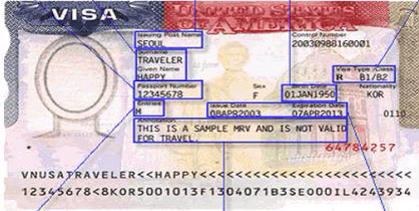
visa - in blankEllis Island, which opened as an immigration processing post on January 1st 122 years ago, symbolizes for many Americans of immigrant descent the place where would-be entrants to the U.S. learned whether they would be admitted to the country.  Perhaps the most famous and wrenching location within this hallowed landmark are the “stairs of separation,” a staircase divided into three sections, with the middle reserved for those barred from immediate entry.

As Grazyna Drabik and Paul Riker, two teachers at the City University of New York, describe the process, it could be harrowing even for those allowed admission:

The immigration officers asked the immigrants the same questions that they were asked upon departure. The initial responses were recorded on the ship’s manifest, and the officers would use this to verify the immigrants’ responses. Immigrants were asked up to 29 questions including how much money they had on them, if they were polygamists, and if they had a job already lined up. If they passed this aspect of the screening, they were free to go. The entire process would take between three to five hours per immigrant.

Ellis Island no longer processes prospective American Dreamers but serves instead as a memorial of our immigrant heritage.  While immigration screenings still occur at land borders, U.S. ports of entry and pre-flight inspection posts, the more difficult and consequential grilling happens at American embassies and consulates abroad, where virtually all applicants for visas, save for children and the very old, must be interviewed by U.S. consular officers.

Members of the public and lawyers for visa applicants, however, are usually barred from attending consular interviews. Little official information is publicly available about the purpose and nature of the interview and the burden of persuasion imposed on the visa applicant.  Other information is only accessible on a limited basis, e.g., by members of the American Immigration Lawyers Association, “Notes from Meetings with DOS Mission India,” AILA InfoNet Doc. No. 13122744 (Posted 12/27/13).

The State Department offers online resources that only generally discuss the immigrant visa interview process and fee payment procedures. State has published almost nothing on nonimmigrant visa interviews, other than to say at 9 FAM 41.102 N2.1 (“Visa Interviews”) that consular officers “must make every effort to conduct visa interviews in a fair manner” and that each officer must use his or her “best interviewing techniques to elicit pertinent information in order to assess the [applicant’s]  qualifications for the visa and identify any potential security concerns.”

This blog post will shed light on the arcane visa interview process and suggest ways for applicants to improve the chance that the desired visa will be granted.  Some applicants have been known to pray to a supposed deity known as the “Visa God.” For everyone else, the following immigration-insider tips may prove helpful.

Purpose, Format and Legal Background

A visa is no more than the privilege to (a) be carried on a mode of public transportation such as a plane or a ship, (b) approach the border or other inspection post, and (c) request that an inspecting immigration officer admit the individual to the United States.  The visa interview is designed to elicit information to allow a consular officer to resolve, one way or another, two questions:

  1. Is the applicant, as a matter of fact, eligible under law, i.e., the Immigration and Nationality Act (INA), to be granted formal admission or entry to the United States?; and
  2. Assuming that the individual is theoretically eligible to receive a visa under law, are there any disqualifying grounds that would make the person inadmissible to the U.S. and thus ineligible to receive a visa?

Mostly questions asked at visa interviews are factual rather than legal.  This is significant because of a doctrine known as consular nonreviewability (or as we lawyers dub it, consular absolutism).  That doctrine holds that no court and no Executive Branch official can overrule a decision of a U.S. consular officer to refuse a visa based on a question of fact.  In most cases, the consular officer will be the ultimate arbiter of the facts; hence, the visa applicant’s answers to questions posed by the consular officer are critically important.

Of equivalent importance are the legal standards that apply to visa interviews:

  1. The visa applicant bears the burden to establish that s/he is (a) eligible under law to receive the particular visa requested and (b) not legally inadmissible to the United States;
  2. The visa applicant must overcome all legal presumptions found in the INA, such as the presumption of immigrant intent or the “intending-immigrant” presumption, which stacks the cards against the applicant by making the individual ineligible at first blush for visas available, for example, to business visitors, tourists, trainees, students and other classes of applicants who by law must maintain an unrelinquished permanent residence abroad if they are to be found eligible to receive such a visa; and
  3. The visa applicant must establish eligibility for a visa not merely by the more-likely-than-not (“preponderance of the evidence”) standard that applies to most decisions in civil (non-criminal) matters, but to the higher and more nebulous and subjective standard, “to the satisfaction of the consular officer.”

Pre-Interview Preparation

Learn as much as possible before the interview about the underlying eligibility criteria for the particular visa you seek, and any possible negative factors (grounds of inadmissibility) that might apply to you. For example, visitors for business or pleasure must show that (a) their purpose for entering the U.S. is sincere and lawful, (b) they will enter temporarily and return to their foreign residence abroad (which they have not abandoned), and (c) they have sufficient funds available to avoid the temptation of unauthorized employment.  Published resources, if carefully vetted, may be helpful for background information on visa categories and requirements, but there is no substitute for the counsel of a competent immigration lawyer in understanding visa eligibility and inadmissibility.

Consular officers expect to glean most of the information during the interview from the words uttered by the visa applicant and the applicant’s answers on the online visa application (Form DS-160), and only secondarily from printed materials.  Still, visa applicants should bring with them any relevant evidence that may help establish visa eligibility or refute any perceived ground of inadmissibility.  The printed evidence should be well organized and tabbed for ready access and proffer during the interview if a fact brought out from a consular officer’s question might be more readily confirmed by presenting a single relevant document to show the officer.

Needless to say, however, the applicant should be fully familiar with the answers to all questions on the Form DS-160 and all documents submitted before the interview (if a petition or other documents were filed with U.S. Citizenship and Immigration Services or with the consular post) or while it transpires.

The applicant must always tell the truth but should also be sure that nothing truthfully relayed during the interview conflicts with any answers on the DS-160, or the documentary evidence previously filed or submitted in person.  Consular officers often look for inconsistencies; so if a correction or clarification needs to be made, that should be explained proactively by the applicant before the consular officer has the chance to seize upon any discrepancies.

Review the embassy or consular website to make sure about complying with any security restrictions such as bans on the carrying into the consulate of laptops, smartphones, thumb drives, cameras, etc.  Get a good night’s sleep, and then have a filling meal and arrive well before the scheduled time of the interview.  Dress for success  — wear clothes that show respect — business attire is usually best.

Try and anticipate the questions posed and practice your responses — not so that they are scripted but that you are ready to phrase answers in a way that, while always truthful, persuasively demonstrates why the consular officer should find you deserving of the visa you desire.  Applicants should recognize that expressions of anger, frustration or other strong negative emotions will meet with a visa refusal in virtually all instances.

Visualize that, instead of applying for a visa, you are applying for a bank loan.  No banker will lend money to someone who appears distrustful, disorganized, nervous or frightened, or whose hands are shaking or voice is quavering, or who refrains from making eye contact.  Neither will a consular officer readily issue a visa to an applicant displaying these mannerisms.  Plan to adopt a pleasant expression and to try to convey a confident, modest but worthy attitude, one that is respectful of the consular officer’s burden to decide the case fairly and the importance of law compliance.

The Scoop on Consular Officers 

The State Department divides Foreign Service Officers (FSOs) into five “cones” or tracks: Political, Economic, Consular, Management and Public Diplomacy.  The Consular cone is the least prestigious or desirable, but all FSOs must spend some time (however begrudgingly) as a consular officer conducting visa interviews.  The INA is a massively complex law, but no less so than the binding guidance found in the regulations of several federal departments and agencies interpreting it.  Added to that is an internal manual, often amended, to guide consular officers on visa adjudications known as the Department of State Foreign Affairs Manual (Volume 9).

Training in immigration law for consular officers is rudimentary at best.  Usually just a 31-day course is required immediately prior to the first consular tour and then repeated every 5 years for those who do a later consular tour.  There are also other more specialized training courses available that are not obligatory but that are commonly taken by those who do more than one consular tour. The 31 days of preliminary training covers the full breadth of a consular officer’s role, including parts completely unrelated to visas, such as American Citizen Services.   Conoffs, as they sometimes are called, also receive training in the reading of “micro-expressions,” and following one’s gut instincts.  In this blogger’s view, they soon conclude that “no” is a safer answer for ever higher career progression than “yes,” and develop a preternatural perception that the State Department stands at a higher level of importance than any other federal agency with a role in the administration, enforcement and interpretation of the INA.

Consular officers do not choose the post where they will serve.  They may have arrived only recently in country and have had little time or training to learn about local culture, customs and practices.  As a result, they often rely unduly on the foreign nationals employed (often for many years) at the local American consulate, who often become a power (more real than titular) unto themselves.  Be very nice to these staffers, for they help or hurt you almost at their whim.

Consular officers are regularly evaluated more by the speed with which they conduct interviews and decide visa applications (typically in two to five minutes each), and less by the quality of their decisions.  Interviews are expected to end in the morning or at the latest in the early afternoon. Highly rated conoffs are “rewarded” by being taken off the visa line and assigned more attractive duties.

The Visa Interview

Interviews are rarely conducted in private.  Rather, the applicant must stand at a counter in front of bullet- and bomb-proof glass and speak into a microphone while a multitude of other visa applicants sit or stand nearby, within earshot.  Listening (discreetly) to the questions of consular officers and the answers given may be helpful — so long as you are not rattled by the frequency of visa refusals.

The consular officer will be seated on the opposite side of the glass at a computer, taking required actions such as reviewing security clearance reports and case-relevant data, while also articulating questions only some of which may pertain to the visa category.  Consular questions may be posed merely out of boredom or curiosity about the applicant’s field of endeavor or to develop a beguiling “good cop” appearance.

In any case, visa applicants must speak in a voice that can easily be heard, with clear enunciation (since the consular officer may not understand your accent). Even if the consular officer speaks your language, you should try to respond in English if you are reasonably capable in that tongue.

You should respond to questions posed succinctly but always “stay on message.”  You must politely but assertively show reasons why you deserve to receive the visa sought.  Imagine an empty beaker that must be filled by the time the interview ends with good reasons and positive impressions that support issuance of the visa.  If the beaker is empty when the interview concludes or is filled with dross and dirt about you, your application will likely be refused.

The Visa Decision

The consular officer will tell you at the end of the interview if your visa will be issued or refused.

If it is granted, you will learn whether to stay and wait for it, return later or expect to receive it (affixed to your passport) by delivery service.

If it is refused, the consular officer will explain whether it is a “hard” or “soft” refusal.  Although the conoff may not use these terms, a hard refusal is one where the officer has decided the facts adversely and found that you are legally ineligible to receive a visa or are found to be inadmissible under the INA.  A soft refusal, one issued under INA Section 221(g), is one that suggests a temporary or tentative basis to refuse the visa, a basis that may be overcome.  For example, a missing document, such as a birth certificate or job verification letter, may be needed.  Or, “administrative processing” for background security screenings must still be conducted.  If Section 221(g) applies, the consular officer will likely explain what action items remain.

If the officer indicates, however, that his or her decision to refuse your visa is final, do not cry, raise your voice, show anger or express negative emotions.  Instead, politely ask the officer to explain in detail the reasons for the decision and ask if there is any other document, information or evidence that might cause the officer to reconsider.  It is probably not helpful to try and persuade the officer at that point to reverse the decision and issue the visa.

Whether or not the officer suggests other evidence, you should express thanks and leave the building promptly.  Immediately, then, sit down and write a note or email outlining in great detail every question asked, every answer given, all body language observed and any other information that may be helpful to a third party (e.g., a government official, an immigration lawyer, a journalist) in understanding why your visa was refused.  They may be able to help you try again or seek reconsideration.

* * *

Under U.S. law, only a consular officer can issue you a visa. No article and no immigration lawyer can insure that your visa will be issued.  Hopefully, however, by following these suggestions, preparing well, and presenting a compelling and deserving case, your chance of receiving that visa will be substantially improved.

[Blogger’s Note:  Heartfelt thanks go to attorney Loren C. Locke, my colleague at Seyfarth Shaw, and a former U.S. consular officer, who has provided me with fresh and useful insights into the visa-interview process, many of which are reflected in this post.]

Ellis Island photo.jpgHindsight, the armchair pundits say, is 20-20.  The year 2013 has proven them wrong.

The end-of-year’s rear-view mirror onto the world of U.S. immigration shows impenetrable fog.  Unsurprisingly, as filmgoers know, vapory views of the recent past tend to diminish the apparent significance of events occurring early in the year (“never has a film released in July won an Oscar“).

So how did a year that began with such thunder for comprehensive immigration reform (CIR), and that culminated in the mid-year passage of a massive reform bill in the Senate, end with such a thud? Chronicler Aura Bogado ably and graphically recounts key immigration events of 2013 that show how CIR ultimately died in the House.

A chronological description of events, however, reports what happened but not necessarily why.  For that, no matter how daunting the task, NationOfImmigrators is at your service, hereby conferring its 2013 IMMI Awards.  

Just as in years past (2010, 2011 and 2012), the rules are the same:  There are no rules.  These awards are merely one immigration insider’s  opinions formed from the outside — before, during and after a recent trip to Ellis Island (it had only partly reopened five weeks earlier after suffering damages from Hurricane Sandy).  Our national immigration monument, quite fittingly, is a substantial remove from Foggy Bottom and environs, the epicenter for most of the year’s action and inaction.  

Modest Effrontery.  For all his huffing and puffing about taking action this year on CIR, President Obama seemed like just another old wheezer who bloviated at his teleprompter while failing to blow the House down.  He deserves kudos and an IMMI, however, for his decision to reach into his executive powers and extend the remedy of Parole-in-Place to undocumented immigrant relatives of military personnel.  If only he’d shown more verve and expanded the class of PIP beneficiaries. Too bad as well that he had to fib to hecklers that he lacked the power to stop deportations.  But at least the annual pace of removals is down by 10% and we will not be awarding the “Deporter in Chief” IMMI this year. Maybe he should receive an IMMI for Illegal Reentry Prosecutor of All Time.   Let’s wait and see how he earns new stripes in 2014.

Profiles in Dithering.  The IMMI goes jointly to House Speaker John Boehner (who knew full well that the bipartisan votes to pass the Senate’s CIR bill were there in the House but lacked courage to bring it to a vote) and to Tea Party Republicans (TPRs) in the House (who let kowtowing to their Districts prevail over patriotism, the nation’s interest, and the welfare of the GOP).   At least Speaker Boehner has shown some spine of late in confronting his TPR wing on fiscal and other matters and hiring the former immigration policy advisor of the Gang of Eight’s John McCain.

Devouring One’s Own.  The IMMI goes to advocates for immigration reform who began attacking one another in social and traditional media over tactics (some labeling the stratagems as publicity stunts and others describing them as classic civil disobedience) while losing sight of the overarching need for CIR and creating head fakes to move the eyes of the public away from all temporizing in the House. 

Judges Got to Be Free.  The Board of Immigration Appeals (BIA) shares this IMMI with the Immigration Section of the Federal Bar Association (FBA).  The BIA receives it for demonstrating repeatedly that despite their members’ unfortunate positioning as Justice Department employees who report to the Attorney General rather than truly independent jurists, they can and do rule on the law against the federal government regularly.  See, e.g., Matter of Douglas, 26 I&N Dec. 197 (BIA 2013)(child citizenship rights); Matter of E-S-I-, 26 I&N Dec. 136 (BIA 2013)(rights of incompetent respondents); and Matter of Lee (E-2 spouse’s statutory right of employment authorization without need to apply for a work permit). The FBA Immigration Section earns the IMMI because it developed an extensive proposal for an independent immigration court no longer yoked to one party to the controversy, and secured the approval of the FBA Board of Directors to adopt as its formal policy on issues/advocacy an “Article I Immigration Court” proposal which can now be considered by Congress as part of CIR.  Honorable mention goes to the Immigrant and Refugee Appellate Center which has dutifully indexed unpublished BIA immigration cases for all to see.

Private, Off-the-Shelf Organization.  Epitomizing lawlessness in government, this IMMI is conferred in recognition of Oliver North’s observation during the Iran-Contra Affair that then-CIA Director Casey had a “private, off-the-shelf organization” to run covert operations in lieu of nation’s own spy agency.  The IMMI goes to the self-aggrandizing adjudicators at one or more regional service centers and at consular posts abroad who take the law into their own hands, concoct new extralegal evidentiary and procedural requirements, and deny requests of individuals and firms who deserve to receive the immigration benefits they seek.  The prime 2013 examples are the snitches who instigated a Homeland Security Department, Office of Inspector General (OIG), investigation of USCIS Director Alejandro Mayorkas through Sen. Charles Grassley  — an investigation assailed for its partisan and ham-handed methods by Judiciary Committee Chair, Patrick Leahy.

Lifetime [of] Achievement.  This IMMI goes to USCIS Director Alejandro Mayorkas (since confirmed as Deputy Secretary of the Department of Homeland Security) who achieved more than any previous Director of USCIS or Commissioner of the legacy agency, Immigration and Naturalization Service, in my 35+ year lifetime as an immigration attorney.  A lawyer’s lawyer, Mr. Mayorkas transformed the agency from a DHS backwater to a leader in public engagement and customer service, vastly improving stakeholder outreach, policy articulation, technological resources, and the speedier delivery (and concomitant reduction in backlogs) of new and existing benefits programs, while maintaining the integrity of the immigration system and allowing his agency to serve as a welcoming beacon to immigrants and nonimmigrants, petitioners and beneficiaries alike.  Mr. Mayorkas never veered from his duty to make sure that all cases are decided solely on the facts and the law, without fear or favor.  While we often disagreed, I know he will be sorely missed and that his salutary legacy will be felt for decades.

Rush to Pre-Ordained Judgment.  The IMMI is awarded to the DHS OIG for its recent report on the USCIS’s administration of the EB-5 Immigrant Investor “Regional Center” program.  The OIG has long packaged immigration baloney, while claiming to produce an objective and impartial study of a particular government program or practice.  This new EB-5 report, if it is to be swallowed, should likewise be slathered liberally with mustard or another masking condiment of choice.  The report focuses on the gripes of low-level officers, interviews no one outside of government, largely disregards the views of senior EB-5 program leaders at USCIS, and ignores multiple improvements to the adjudication of regional center cases and enhancements to promote consistency, detect and prevent fraud and promote the program’s mission of job creation (well documented in the accompanying memorandum of USCIS Director Alejandro Mayorkas).  It suggests, preposterously, that USCIS lacks legal authority to revoke a regional-center designation request based on fraud or national-security grounds, and that USCIS should study the program’s effect on job creation (even though such a study is clearly outside of the agency’s mission).  To be sure, the EB-5 program would benefit from greater regulatory clarity and closer liaison with the SEC and Commerce Department as the OIG proposed.  But it is as if this new OIG report essentially studied an old pre-op photo of a patient revealing an aquiline snout, disregarded the marvelous post-op results of rhinoplasty, and concluded that the patient has a big, ugly nose.  Clearly, the OIG has a nose for baloney; but it should not be given credibility as a pretext to eliminate the valuable EB-5 program.

DOMA’s Wake and Post-Mortem.  This IMMI goes jointly to the Supreme Court for invalidating most of DOMA (the Defense of Marriage Act) in U.S. v. Windsor, and to the federal immigration agencies (USCIS and the State Department) that quickly responded by according equal treatment under the immigration laws to same-gender bi-national couples as have long been enjoyed by heterosexual spouses.

Immigration Champions.  The IMMI goes to the American people (documented and otherwise), from all walks of life and every political persuasion, who are way ahead of their government leaders in supporting immigration reform and to countless advocates who have protested, marched, attended Town Halls, been arrested, wrote letters to editors, visited Congress and the White House, convened forums, tweeted, blogged, found bittersweet humor, argued that immigration is “one of [the] biggest civil rights issues” of our time, and screamed to the rafters that the time is now to fix our dysfunctional system. It also goes to Pope Francis who has spoken widely on the plight of immigrants as well as to those who make the religious and moral case for immigration reform, and to all the think-tanks and studies that showed CIR would dramatically benefit our economy, create jobs and improve the lot of all who reside in America.

Best Random Immigration Quote.  The IMMI goes to the fashion retailer Louis in Boston for the quote emblazoned on its stairwell wall: “We create boundaries only to trap ourselves within them.” View image.

No More Traffic.  The IMMI goes to the coalition of people, groups and agencies who have resolved that trafficking in humans must end.  

Perp Walk Blooper.  For insensitivity to cultural differences despite a shared ethnicity, the IMMI goes to the otherwise impressive Preet Bharara, the U.S. Attorney for the Southern District of New York. The Indian government and many of its people challenge his justification for the post-arrest strip search of Indian consular officer, Devyani Khobragade, who claims full diplomatic immunity from visa fraud charges based on her status as adviser to India’s permanent mission to the UN. Whatever the merits of the visa fraud charges, the U.S. should not undermine its adherence to diplomatic immunity, a privilege from prosecution which protects our diplomats abroad as much as foreign diplomats in the U.S. charged with crimes.

Jackboot Welcome.  This IMMI goes to the U.S. Customs and Border Protection officers at the JFK port of entry who obliterated a permanent resident’s livelihood by destroying his collection of musical instruments apparently claiming they were agricultural products.

We’re not from DC – We Get It.  Kudos and an IMMI go to the cities, states and regions that recognize the value of immigrants as contributors to their communities.  Their welcome mats are out and, without waiting for Washington, they are taking tangible steps to be more inviting to the foreign-born while full-throatedly talking devolution.

* * *

That’s it for this year’s IMMI awards.  Maybe next year’s top IMMI will go to Congress if it finally moves ahead to enact comprehensive immigration reform legislation.  We can only hope. Stay tuned.

gender bias 2.jpg[Blogger’s note:  Once again the prolific and ever lucid Careen Shannon offers fresh insights on another facet of our dysfunctional immigration system.  Today, she shows why gender bias taints America’s immigration system, and what should be done to eliminate structural bias as part of comprehensive immigration reform.]   

Immigration Reform Must Redress the Current Law’s Gender Biases

 by Careen Shannon

 As 2013 comes to a close, we are no closer to comprehensive immigration reform (CIR) than we were when a newly elected President Obama optimistically promised that such reform would occur during his first year in office.  Advocates for immigrants have not lost hope, but it seems clear that if and when reform comes, it is unlikely to resemble the compromise hammered out in the Senate’s bipartisan comprehensive immigration reform bill (S. 744). This does, however, give women’s rights’ advocates an opportunity to look at the ways in which both our nation’s current immigration system, and the reforms to that system that the Senate incorporated into its bill, fail to adequately address the special needs of immigrant women and their families. Maybe there is still hope that we can get it right. 

As documented in a report (“Gendered Paths to Legal Status”) issued by the Immigration Policy Council, immigration laws which appear gender neutral “actually contain gender biases that create barriers for many women trying to gain [lawful status] within the current immigration system.”  Specifically, “immigration laws assume dependencies that privilege male applicants over females and that often make women an afterthought.” Below are just a few examples of how this is so. 

Family-Based Immigration

Most people who immigrate to the United States do so on the basis of family ties. In Fiscal Year (FY) 2012, more than 1,000,000 people immigrated lawfully to the United States, and nearly 66 percent of them did so based on a family relationship with a U.S. citizen or lawful permanent resident. There is a notable gender imbalance, however, with approximately 70 percent of immigrant women (compared to 61 percent of men) obtaining lawful status by qualifying for family-based immigrant visas, according to government data

For persons immigrating as the spouses of U.S. permanent residents, there are lengthy backlogs—sometimes lasting many years—that keep families separated. Since the sponsor in these types of cases is generally the man, this means that it is mostly women who suffer the consequences of the statutory and administrative backlogs that plague these visa categories, often languishing abroad for years, or living in the shadows in the United States.

In addition, our family-based immigration system prioritizes the nuclear family, and makes it difficult if not impossible for extended family members to immigrate. For example, if an adult U.S. citizen were to file a petition today to sponsor her brother or sister for permanent residence, that sibling would have to wait anywhere from 15 to 30 years (depending on country of birth) for a green card. Under current law, adult U.S. citizens can sponsor their parents for permanent residence, but permanent residents cannot, which forces many families to make hard choices about how to care for elderly parents left behind in their home countries. 

Employment-Based Immigration 

Foreign nationals can also immigrate to the United States, or live here lawfully on a temporary basis, if a U.S. employer hires them and sponsors them for an employment-based visa. Here, there is an assumption that men are the breadwinners and women are dependents.

Most temporary work visa categories, for example, do not grant work authorization to spouses who accompany the sponsored worker, which perpetuates women’s dependency. Both the immigrant (permanent) and nonimmigrant (temporary) employment-based visa categories favor men, largely because they are increasingly skewed toward encouraging the immigration of workers in the so-called STEM fields (science, technology, engineering and mathematics), who are overwhelmingly male. Immigrant women in the United States mostly toil as domestic workers, and with only 5,000 immigrant visas available each year for unskilled laborers (and yes, childcare workers and other domestics are considered unskilled workers), it is virtually impossible for a nanny or other domestic worker to secure lawful status. 

Asylum & VAWA 

When it comes to asylum, which can be granted to foreign nationals who have a well-founded fear of persecution in their home countries, women often have a harder time qualifying than men. Women are often not recognized as independent political actors, and thus political activities which have subjected them to persecution are often dismissed.  Harms that are unique to women—including female genital mutilation, gender-based violence, forced marriage and honor killings—are often similarly rejected as constituting persecution. 

Even laws enacted specifically in order to benefit immigrant women, like the immigration-related provisions of the Violence Against Women’s Act (VAWA), often create obstacles to women seeking lawful immigration status. For example, VAWA allows a battered immigrant woman to self-petition for permanent residence (rather than having to rely on her citizen or permanent resident husband to file a petition on her behalf), but she needs to demonstrate that she was living with the man who battered her. This can be challenging when it is only the husband who has lawful status and when all relevant documentation—leases, bank accounts, utility bills, and the like—is in his name alone and under his control. 

How the Senate Bill Would Have Helped Immigrant Women 

So will immigration reform improve prospects for immigrant women and their children? There are a number of provisions in the CIR bill that passed the Senate (and in a similar House bill, H.R. 15, which was introduced by House Democrats in October) that would make it easier for undocumented women to legalize their status. For example, while the normal path to permanent residence under the Senate’s proposal would require applicants to be regularly employed, there would be waivers available that would benefit some women (such as those who are pregnant, or who serve as the primary caregivers to minor children). 

The existing family-based immigration system would be amended to allow spouses and minor children of lawful permanent residents to immigrate without any annual quotas (currently the case only for parents, spouses and minor children of U.S. citizens), although parents of permanent residents would still be excluded. 

Immigration judges would be empowered to close deportation proceedings if a person’s deportation would create hardship for his or her child or children (so long as those children are permanent residents or U.S. citizens). Currently, overzealous immigration enforcement disproportionately affects women, causing separation from loved ones and often leading to termination of women’s parental rights, but the Senate bill would protect women’s (and men’s) parental rights while they are detained pending deportation. 

How the Senate Bill Failed to Redress Existing Gender Inequities 

But there is much in the Senate bill that would be harmful to women, and these shortfalls should be addressed in any new reform efforts. For example, the requirement for an undocumented immigrant to document employment in order to maintain lawful status would create special barriers for immigrant women, who overwhelmingly work in the informal economy and would be hard-pressed to provide such evidence. 

Overall, the Senate bill proposes a de-emphasis on family-based immigration in favor of more immigration of persons with advanced educational credentials and professional skills, and this would make it more difficult for women, who typically do not have equal access to higher education in their home countries. The current immigrant visa category allowing adult U.S. citizens to sponsor brothers and sisters for permanent residence would be eliminated, and this category now primarily benefits women. Given that women largely depend on the family-based system to immigrate legally to the United States, all of these changes would have a disproportionately negative impact on women. 

The Senate bill would also require certain milestones related to border security and enforcement to be met before undocumented immigrants could become permanent residents—and any bill with any hope of passage in the House would undoubtedly contain even tougher security-related triggers. But the truth is that we have already exceeded all current goals related to border security and immigration enforcement, without accounting for the disproportionately negative collateral consequences of such enforcement on women and children. 

In a period of just over two years, the U.S. government issued more than 200,000 deportation orders against parents of U.S. citizens—children who were born in the United States—leaving many of those children behind in the child welfare system. Older children, who may have been brought to the United States as infants and consider themselves American notwithstanding their lack of lawful immigration status, are often shut out of educational and vocational opportunities. While some such youth have been able to benefit from the Obama Administration’s decision to decline to deport them, absent passage of The DREAM Act or similar legislation, the future remains bleak for these individuals. 

Looking Forward 

Immigration reform will not succeed if it fails in its obligation to protect women, who constitute 51.1 percent of the foreign-born population in the United States, or if fails to bring immigrant children into the mainstream. Once our dysfunctional Congress gets back to actually doing its job—to actually governing—immigration reform needs to find its way back onto the legislative agenda.  When it does so, the needs of women and children should be specifically addressed if immigration reform is to have any real meaning. 

2013.jpgYes, it’s that time of year.  NationOfImmigrators.com is preparing its annual list of the year’s best and worst in immigration policy and law.  Here is your chance as an immigration stakeholder  — an Immigrator — to help us crowdsource the best and worst categories and the people and organizations to name as Nation of Immigrators’ biggest winners and losers for 2013.

For prior years’ selections, check out 2010 2011 and 2012 IMMI awardees. 

Even the Director of USCIS, Alejandro Mayorkas, pays attention to the IMMIs.  So should you.

Let your voices be heard.  Tweet your nominees on Twitter at #2013IMMIS or email me.

retro_grunge_triangles_background.jpgThe dictionary defines the adjective, “passive-aggressive,” as “a type of behavior or personality characterized by indirect resistance to the demands of others and an avoidance of direct confrontation.”  That is an apt characterization describing how federal bureaucrats work their will in the immigration ecosphere.  The passive-aggressive behaviors show up in efforts by federal immigration officials to enlist and “deputize” third parties to enforce national immigration policies.  

The ploy plays out in a variety of contexts — from union-management relations to the interactions of corporate customers with their service providers, as well as to visa applicants trying to persuade American consular officials of not only their own eligibility to receive U.S. immigration benefits but also the worthiness of persons and firms petitioning on their behalf.

How so?  Consider these familiar scenarios:

Verifying Employment Eligibility. Union dues are the mother’s milk of organized labor. If workers cannot be hired or remain employed because they lack authorization to work in the United States, the union becomes less well nourished. In industries with historically high concentrations of unauthorized workers (say, manufacturing, hospitality, food service, construction, and janitorial services, among others), loss of dues payments from prospective members never hired (or current members terminated) for lack of work permission may force the union beyond suffering mere malnutrition to facing a life-threatening malady.

The federal government, however, has no statutory power to discourage unions from enrolling unauthorized workers as members. Its power rests with the Immigration Reform and Control Act which requires or allows various methods to determine employment eligibility and imposes burdens on employers to maintain proper records (the Form I-9 and, in some cases, digital records of immigration compliance contained in the E-Verify database) and refrain from (knowingly) hiring the undocumented.

Not surprisingly, federally induced immigration skirmishes between labor and management often ensue. Employers opt for strict compliance with the laws punishing unauthorized employment while unions urge on management only investigations that probe ever so lightly into questions of the union members’ identity and work eligibility. Either way, the immigration triangulation strategy is a winner for the bureaucrats. Probe too deeply and the employer faces charges of immigration-related employment discrimination from the Justice Department’s Office of Special Counsel for Unfair Immigration-Related Employment Practices or from state regulators and private litigants under laws such as those just passed in California. Be too blasé about following up on potential instances of unauthorized employment and U.S. Immigration and Customs Enforcement will use the constructive-knowledge principle to show that the employer — had it conducted a reasonable inquiry — would have learned that the workers in question were unauthorized, and thus, is liable for employing unauthorized individuals with knowledge that they lacked the right to work.

Contracting with Vendors. In 21st Century America, technological innovation and globalization have transformed the way goods are produced and services provided — a “duh!” statement of the highest order. Increasingly, American businesses are opting to “rent” rather than “buy” human capital; they prefer engaging third-party providers rather than hiring workers directly. This is not necessarily job-shopping or staff augmentation writ large. Rather, American corporate customers are finding it best to focus on their core competencies and to acquire from consultants, vendors and service providers a variety of sophisticated services which would otherwise be too costly or off-mission to develop internally.

Here too, the federal government has no statutory power under current immigration laws to regulate relations between private parties, in this case, between customers and vendors who legally contract for needed services.  Yet, immigration triangulation is the stratagem of bureaucratic choice.  The Labor Department insists that a contractor using employees in “H-1B” status (the visa category for workers in specialty occupations) to fulfill its contractual obligations to its customers must post paper notices or publish electronic notices on the customers’ premises or its intranet, and in some cases, must interrogate the customer about its layoff practices and plans under the “secondary non-displacement” obligation.  If the customer refuses to allow such intrusions, the government — if it has its way — would force the services vendor to breach its contract by pulling its H-1B employees from the customer’s job site.  Similarly, U.S. Citizenship and Immigration Services (a component of the Homeland Security Department), relying on dubious legal authority (just one of many infamous “Neufeld Memorandums”) often refuses to approve H-1B visa petitions submitted by law-abiding contractors unless their customers disclose confidential and proprietary information about the terms of the contract for services.

Demonstrating visa eligibility.  A new form of triangulating behavior has recently surfaced among U.S. consular officers. This ploy involves a disinclination to consider evidence of work-visa eligibility unless it comes directly and solely from the applicant’s mouth during a consular interview. While perhaps plausible at first blush, the new policy disregards the fact that certain “corporate facts” (e.g., strategic plans, proprietary information, financial conditions, contracts with third parties, etc.) are simply outside the ken of the visa applicant.  Until recently, however, consular officers routinely reviewed written submissions from petitioning employers seeking work visas for its foreign employees. Indeed, the State Department has long recognized the inability of a visa applicant to know and relay all of the corporate facts, and thus urged consular officers to make inquiry of the employer, as shown in this 1994 cable:

[C]onsular officers should note that in many cases involving third party contractors, the visa applicant may not be fully aware of the arrangements made by his/her employer and the contracting company. Therefore, when questions arise as to the exact nature of such arrangements, consular officers should make it a point to confer with the employer or of allowing the alien to bring the matter to the attention of the employer before making a finding of fact.

* * *

Is there a legal basis for these sorts of immigration triangulation? No. But power is as power does. Bullying is now seen — at least in America’s schools — as unacceptable behavior. Would that Congress reach the same conclusion with the bullying and passive-aggressive behaviors of America’s immigration bureaucrats.

California palms.jpg“California deserves whatever it gets. Californians invented the concept of life-style. This alone warrants their doom.” ― Don DeLillo, White Noise

“Political corruption, social greed, and Americanized quasi-socialism can ruin even the most wonderful places. California proved that.” ― Tiffany Madison

As a transplant from Michigan who has thrived in California since settling here in 1982, I’ve come to expect sneering and cynicism heaped upon this lovely, blessed state.  The foregoing quotes are of the genre, California sniping, expressed most frequently as Jack Frost approaches elsewhere, biting the rest of the country into its perennial frenzy of Golden-State envy.  We Californians are used to that kind of seasonally-induced, sour-grapes hurling.

But sometimes our state legislature and our governor, the monk formerly known as Moonbeam, take actions that all but invite ridicule.

Recent examples are plentiful, as my colleagues at Seyfarth Shaw, Dana Peterson and Coby Turner, noted in their Nov. 26 posting in the aptly titled, California Peculiarities Employment Law blog (“California Employees Have Even More Protections to be Thankful for This Year“).  

Today’s post will focus on just one section of one of two new laws critiqued in the Peterson-Turner post.   Section 4 of Assembly Bill 263, effective January 1, 2014, adds this new provision (Section 1024.6) to the state’s Labor Code: 

1024.6.  An employer may not discharge an employee or in any manner discriminate, retaliate, or take any adverse action against an employee because the employee updates or attempts to update his or her personal information, unless the changes are directly related to the skill set, qualifications, or knowledge required for the job.

The new section sounds innocuous.  Of course no employer should be allowed to assail an employee who merely updates or tries to update “his or her personal information.”  The transgression seems apiece with that cardinal California sin of violating one’s “personal space.”  The devil, however, is in the subtext.  

Consider these common scenarios:

#1:  An employer, aware that U.S. Immigration and Customs Enforcement (ICE) is increasingly auditing and penalizing employers for violations of the immigration-paperwork requirement to maintain proof of every new hire’s identity and employment eligibility on Form I-9, decides to conduct a voluntary audit of its I-9 records.  The employer discovers mistakes or finds copies of identity documents and work permits that, on second look, appear to be less than genuine.  It wants to take corrective steps to mitigate any fines ICE might impose.

#2:  An employer receives a Social Security Administration letter (a no-match notice) announcing that the  employer’s payroll tax contributions tied to particular employees’ social security numbers (SSNs) contain information that conflicts with the SSA’s own records associated with the earmarked SSNs. Or, an employer receives word from its health insurance carrier or pension administrator that the SSNs of certain employees do not square with SSA data.  This employer likewise wants to fix the problem and minimize potential fines before ICE shows up.

Assume that in scenarios #1 and #2, the employer first checks its own records and finds no reason such as a clerical error or typo to explain and resolve the discrepancy.  The employer then approaches the affected employees, explains that a discrepancy has been noted, and asks the employee to provide an acceptable explanation with documentation that resolves the discrepancy and demonstrates that the individuals in question have the right to work in the United States.  Failing the tender of acceptable evidence, the employee will be required to sign a new Form I-9 to verify identity and employment eligibility.

Rather than provide the requested documentation, each of the employees instead informs the employer that s/he has adopted a new name, a new date of birth, a new marital status, or other newly embraced “personal information” and then presents seemingly genuine and relevant original documents of identity and work authorization to confirm the change. 

Today, before Assembly Bill 263 takes effect, an employer is allowed to terminate the individual’s employment if the submission of inconsistent personal information violated company policies requiring that employees be truthful in all of their dealings with the employer.  AB 263 takes away that power to sanction employee dishonesty.  Moreover, since the law also prohibits employers “in any manner” from discriminating, retaliating or taking any “adverse action against an employee” who has updated his or her personal information, AB 263 may even prohibit an employer from investigating whether the newly provided personal information is accurate or likewise false or flawed.

Suppose the employee(s) in fact lacked the right to work in the U.S. and had merely purchased a new set of papers from the local fraudulent-document purveyor.  Under federal immigration statutes and regulations, an employer may not hire or continue to employee an individual whom the employer “knows” lacks the right to work in the United States.  Knowledge of a person’s unauthorized employment status can be actual or constructive, as provided in 8 CFR § 274a.1(l):

The term knowing includes not only actual knowledge but also knowledge which may fairly be inferred through notice of certain facts and circumstances which would lead a person, through the exercise of reasonable care, to know about a certain condition.

In other words, an employer who is aware of certain unexplained facts (such as an “update” of “personal information”), but turns a blind eye to circumstances that seem suspicious or at least worthy of further inquiry, will be treated as knowing the facts that a reasonable investigation would have revealed.  Thus, if the workers were indeed unauthorized but the employer did not investigate the circumstances out of fear of violating the no-adverse-action prohibition of AB 263, ICE would likely fine the employer on two separate grounds.  The fines would be not just for a deficient I-9 but also for the more serious “knowing-continuing-to-employ” offense.

What should the employer do?  Depending on the facts at hand, the better approach would likely be to follow federal immigration law which probably preempts and trumps AB 263.  See, Arizona v. United States, the Supreme Court case which tossed out almost all of Arizona’s SB 1070 on federal-preemption grounds.  Employers presented with personal-information updates should be prepared to defend against state charges under AB 263 by maintaining that merely conducting a reasonable investigation of the facts to determine if an employee is authorized to work in the U.S. is not a form of discrimination, retaliation or adverse action under the new California law.  But since California is indeed peculiar, employers should also be prepared to fight the good fight if organized labor, state authorities or the courts disagree.  At least the weather is nice.

Chained and locked cash.jpg[Blogger’s Note: Once again, the wonderfully insightful, witty and quirky Nici Kersey — I-9 and E-Verify expert extraordinaire — offers the straight scoop on the new E-Verify “lock-down” feature.  Though she sometimes publishes unfounded rumors about me (let the record reflect, I’ve not begun a chauffeur service on the side), she kindly gave me a weekend respite from blogging to share with readers why the E-Verify lock “is a big deal!”]

E-Verify’s New Lock ~ Like it or Not, This is a Big Deal!

By Nici Kersey

At around 3:00 eastern time on Monday, my (obnoxiously self-important) inbox exploded.  Ping!  Ping!  Ping! it said.  Look at me!  I’m bringing you important messages about stuff!  Ping!  Ping!  Ping!

Who died?  I thought, then wished I could un-think.  Maybe it’s good news.  I’ve been selected as an extra for the next Hunger Games movie?  Or maybe Cookie Monster did something awesome on Facebook (again).

Nope.  This time, it was USCIS with an exciting announcement about E-Verify’s latest enhancement.

One e-mail was from USCIS.  The dozens of other messages were from colleagues, clients, and friends spreading the news.  It’s like E-Verify got implants, I thought, then wished I could un-think.

Yes, the most exciting news in my social circle (aside from new photos circulating of Angelo that suggest he may be starting a town car service) has to do with E-Verify.  I know that this is lame.  Despite the rare incidents (like one of my clients semi-publicly calling me “Chick Norris”) that make me feel hip and cool, I have embraced my nerdiness. 

Here’s the announcement.  (The E-Verify announcement.  Not the Paparelli Town Car Grand Opening announcement.)

Angelo towncar.jpg

The enhancement “enables USCIS to lock a SSN that appears to have been misused, protecting it from further potential misuse in E-Verify.” 

What does this mean?  It means that E-Verify is actually getting better at doing what it’s supposed to do:  verify employment authorization.  Since its inception, one of the biggest weaknesses of the system has been that it cannot detect identity theft.  So long as an employee provided someone’s real data, E-Verify would return an “employment authorized” result, even if that data belonged to the person’s brother, cousin, father, my daughter, or a complete stranger. 

Will that still happen?  Sure.  But not as often. It’s not yet clear what the criteria are for locking an SSN, which is why my implants analogy is appropriate:  Will the enhancement pass as genuine, actually improving E-Verify, or will it prove to be more trouble than it’s worth, getting in everyone’s way?

If 25 people suddenly get jobs in the Chicago area, and they all have the same name and SSN, the latest announcement suggests that E-Verify would lock that SSN and would require each employee who used it to either come forward with proof that he/she is the “Real Slim Shady” (viewer discretion is advised) or to effectively abandon his/her job.

But will it go too far?  Our bank locks my husband’s debit card every time he tries to make a purchase more than 5 miles from our home.  This prompts mass hysteria, as we move so frequently that the security questions he is asked by the bank seem like advanced existential philosophy questions.  The name of the street where your doctor’s office is located?  Neighbor’s dog’s name?  Your boss’s favorite holiday dish?  (I’m going to start answering every security question with the word Pumpkin.)

The e-mails from my colleagues were mixed.  One said, “This will be all kinds of fun,” dripping with sarcasm.  Most clients were excited about the news, though they aren’t looking forward to the increase in mis-matches that they will have to resolve.  All of my fake ID vendor buddies, of course, hated the news.  (Dear NSA, I hope you are well.  This is a joke.  Love always, Nici.)

Like it or not, this is a big deal.

It means that we are one step closer to a national ID card and a system in which we can “lock” our own SSNs and identities so that others cannot use them to obtain credit and/or jobs.

It means that people may find out sooner when their own identities have been compromised.  Calls to the FTC will probably increase. 

It confirms that the federal government continues to work toward enforcement and deterrence, even if comprehensive immigration reform really has died.  (We’re not getting any carrots here, just sticks.)

It proves that we are (still) moving toward a law requiring that employers use E-Verify nationwide.

It means that it will become more expensive to get a good fake identity.  Those ID sellers who care about their reputations (yes, their reputations for being really good criminals) will have to work harder to satisfy the market, and fake cards are likely to become more expensive.  (And there will be a greater demand for cheap, bad cards too, as people may have to buy several cards/identities before one works.)

It may also add to the increasing paranoia of people like my father, who looked into having OnStar removed from his vehicle due to his concern that the government might be using it to spy on him.  I implore you to not tell him about this, or my next visit home may find my parents cooking all of their meals over an open flame in the back yard. 

For employers, I offer the following suggestions:

–          If you already use E-Verify, consider a training session for your team to ensure proper use of the system and to update them on this new development.  Focus on non-discrimination training.

–          Review your immigration policies and update them as appropriate.

–          Make sure you have a protocol in place for handling “tips” about your employees’ work authorization (or lack thereof), as this is likely to lead to calls/e-mails/letters from the “Real Slim Shady” alleging that one of your employees is working under his name. (If your workforce is unionized, however, first check the collective bargaining agreement and talk to your labor counsel — Seyfarth Shaw’s are the best, and Angelo can introduce you.)

–          Continue to monitor E-Verify requirements.  Consult with immigration and labor counsel about the pros and cons of registering before it becomes mandatory.

* * *

Thanks for reading, and have a lovely Thanksgiving.

Obama's mojo.jpgThe last few weeks have witnessed severe shocks to the health care system known as Obamacare. The President has issued mea culpas for the not-ready-for-prime-time web site, Health.gov, and for his campaign promise to Americans that if they liked their health insurance plan, they could “keep it. Period.” Americans who’ve lost their preferred health plan have also experienced shocks, of the sticker variety, when they learn the price of replacement coverage.

Viewers of Washingtonian pratfalls who look at Beltway antics through the prism of immigration are neither surprised nor amused. There is no surprise to immigration stakeholders that a government web site intended to transform the way benefits requests are managed would fail, for we can spell “Transformation” and “ELIS” — two immigration software programs with scads of dollars spent and little tangible product to justify the pathetic bang for the buck.  

We are also little amused about promises broken, like the one where a newly elected President would address comprehensive immigration reform during his first year in office. When it comes to immigration, the President’s effort might better be dubbed, IfOnlyObamaCared. To be sure, he’s tried the bully pulpit with no tangible success in the recalcitrant House. 

But squawking is not PIPsqueaking — a pragmatic and tangible way for the President to grant the 11 million undocumented among us respite from deportation through expanded use of Parole-in-Place or PIP, the discretionary power of the President under Immigration and Nationality Act (INA) § 212(d)(5)(A) to transform an unauthorized noncitizen in the U.S. into an individual with legal status.  

PIPsqueaking for the undocumented is a low-decibel measure that would position the undocumented to qualify for green cards through adjustment of status in the future under any of the otherwise available family- or employment-based immigrant visa categories.  All that’s required would be to grant PIP concurrently with another § 212(d)(5)(A) benefit known as “advance parole” and with the issuance of an employment authorization document or EAD. This would allow the undocumented to work and pay taxes and to travel abroad for legitimate business or personal reasons, and then after reentering the U.S. to be essentially cleansed of such prior immigration violations as entry without inspection or failure to depart when required.  

A PIP/advance-parole/EAD three-step wouldn’t fix everyone’s status violations (it wouldn’t absolve those who have accepted unauthorized employment unless they are the spouse of a citizen or otherwise fall within a forgiveness provision). But it would go a long way to help the undocumented live in this country, under humane conditions, by giving them a chance to earn a living, buy a house or car, purchase insurance and care for their kids.   

To its credit, the Obama Administration has approved PIP for citizens of the Commonwealth of the Northern Mariana Islands whose work permits would otherwise have expired.  More broadly, just last week the President’s immigration-benefits agency, U.S. Citizenship and Immigration Services (USCIS), to its credit, issued a policy memorandum authorizing PIP benefits for the undocumented relatives (parents, spouses and children) of “active members of the U.S. Armed Services, [as well as] individuals serving in the Selected Reserve of the Ready Reserve and individuals who have previously served in the U.S. Armed Forces or Selected Reserve of the Ready Reserve.”  USCIS approved PIP eligibility while mindful that active and former U.S. military personnel “face stress and anxiety because of the immigration status of their family members in the United States.” Thus, the USCIS memo decreed:

Absent a criminal conviction or other serious adverse factors, parole in place would generally be an appropriate exercise of discretion for such an individual.

Certainly the children of the undocumented “face stress and anxiety because of the immigration status of their family members in the United States.” So as I’ve urged before, it’s time for the President to reclaim his mojo:

The President’s choices are clear. He. . . . can use his substantial executive authority over immigration policy and make interim changes that alter the facts on the ground. He can establish by rulemaking a registration system that allows the undocumented to come forward, be screened for criminal history and security threats, and grant them temporary work permission until Congress gets to the heavy lifting on CIR.

Had he exercised more mojo than compromise on health care, he would have instead pushed for a simpler “Medicare for all” program that would not have required entanglement and enmeshment with insurance companies that cancel policies.  Nor would he have needed a highfalutin web site for Americans seeking insurance to career through the myriad choices of coverage under the new health-care exchanges.

Had he pushed on immigration reform earlier in his first term, he’d not be facing the dirge of mourners for the failure of comprehensive immigration reform today.  America loves to give second chances.  This is Barack Obama’s.  PIPsqueak your way to immigration salvation, Mr. President.